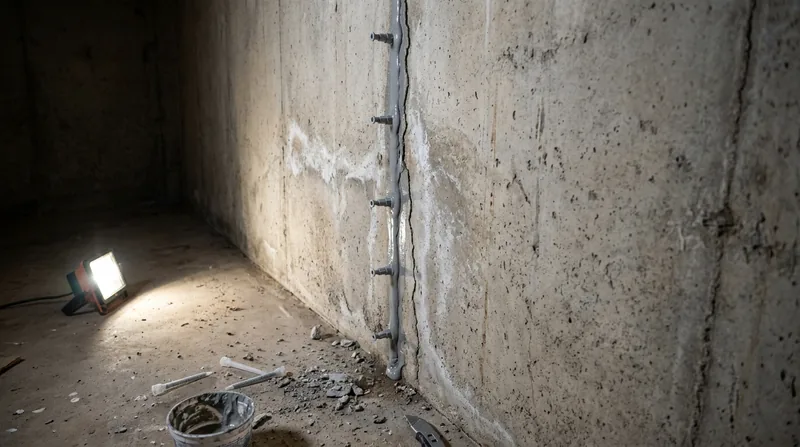




Joliet sits on thin glacial till over Silurian dolomite, the same limestone quarried around Lockport, and that shallow rock gives water a fast route into basements all along the Des Plaines River. In the 1880s-1930s brick and frame homes near Downtown, many walls are stone, brick, or early block sitting on old clay footing drains that have long since silted shut. Out on the Southside and along Black Road, 1940s-1960s bungalows and split-levels show the same freeze-thaw damage every spring. We handle Foundation Crack Repair in Joliet by matching each crack to the right method, not by slapping a patch over it. A hairline shrinkage crack in a poured wall and a widening crack from frost heave need completely different work, and we tell you which one you have before any invoice is written. Start with a free basement inspection if you are not sure what you are looking at.
Why Foundation Cracks Open Up in Joliet's Older Basements
Freeze-thaw winters work Joliet walls every single year. Water gets into a crack in November, freezes, expands, and pushes the crack wider by March. Spring thaw and April storms then push runoff toward those older walls while the Des Plaines River and its tributaries keep the water table high in the low ground. Add fractured dolomite under the till, and water can show up at a foundation faster than the old clay footing drains can carry it away.
- Vertical cracks in poured walls usually trace back to concrete curing and settlement, and they let water in when hydrostatic pressure builds outside.
- Diagonal cracks at wall corners often point to settling or frost heave moving the footing.
- Horizontal cracks are the serious ones, because they signal a bowing wall under soil pressure and need structural repair, not injection.
- White efflorescence on the wall face means water has been moving through the concrete and leaving mineral salts behind.
- Old brick and stone walls near Downtown crack along the mortar joints, where the lime mortar gives way before the masonry does.
If you see any of these, write down where and when the water appears, because that pattern tells us more than the crack itself.
Key info: A homeowner on the Southside called us about a damp spot on the basement wall that only appeared after heavy April rain. The crack was a hairline vertical one, but the real driver was a downspout dumping right at the corner. We injected the crack and extended the downspout, and the wall has stayed dry through two spring thaws.
For the official word on what work needs a permit in this city, check the City of Joliet building department before you schedule structural repair.
How We Diagnose and Repair Foundation Cracks in Joliet
We start by reading the crack, not by reaching for a caulk gun. The width, direction, and location tell us whether this is a non-structural leak or a sign that the wall is moving. We also check the grading, the downspouts, and the footing drain situation, because a crack that keeps leaking after injection is usually being fed by water that should never have been at the wall.
- We walk the basement and mark every crack, damp patch, and line of efflorescence with tape and a photo.
- We check the exterior grade and downspout discharge to see how much surface water is reaching the foundation.
- We measure crack width and direction, then classify it as non-structural, moving, or a bowing wall symptom.
- For non-structural cracks, we drill injection ports along the crack and seal the surface.
- We inject epoxy for structural bonding or polyurethane for active leaks, depending on what the crack is doing.
- We trim the ports, finish the surface, and walk you through what to watch for over the next wet season.
When the crack is only part of the problem, we say so and point you to the right fix instead of selling injection twice.
Key info: A 1950s brick ranch off Black Road had a diagonal crack at the corner and water on the floor after every big storm. Injection alone would have failed, because the footing drain was clogged and the wall was taking hydrostatic pressure. We recommended an interior drain tile system first, then injected the crack once the water had somewhere to go.
Crack Repair Methods We Use and When Each One Fits
Not every crack gets the same treatment. The table below shows how we match the method to the crack, and we will tell you plainly when simple sealing is enough and when the wall is telling you something bigger.
| Approach | Description | Best for |
|---|---|---|
| Epoxy injection | Ports drilled along the crack, epoxy injected under pressure to bond the concrete back together. | Non-structural vertical cracks in poured walls that are not actively leaking. |
| Polyurethane injection | Flexible foam injected into the crack, expanding to fill voids and stop active water. | Active leaks and cracks that move slightly with the seasons. |
| Surface sealing and parging | Hydraulic cement or masonry patch applied to the wall face after the leak is stopped. | Old brick and stone walls where the crack is in the mortar joint. |
| Carbon fiber straps | Straps bonded to the wall to resist inward movement. | Horizontal cracks and early bowing wall symptoms. |
| Wall anchors | Anchors driven into the soil outside and connected through the wall to pull it back. | Walls that have already bowed and need to be straightened. |
If the crack is paired with a bowing wall, the structural fix comes first and the leak repair follows, never the other way around.
Foundation Crack Repair Cost in Joliet: What to Expect
Most single non-structural crack injections in Joliet start at From $450, and that covers the site visit, port installation, injection, and cleanup. That figure moves up with crack length, how many cracks you have, and whether the wall is poured concrete or old brick and stone. A crack in a 1920s Downtown stone wall takes more prep than a clean vertical crack in a 1990s poured wall out in Shorewood.
Access matters too. A crack behind a finished wall or under a low soffit slows the work, and so does a basement packed with storage. If the crack turns out to be structural, the number moves into a different range, and we tell you that on site instead of surprising you later. Getting two or three estimates is smart in this market, and so is asking each contractor what method they plan to use and why.
For the full breakdown of what we charge, see our pricing page.
Foundation Crack Repair Near Me: How to Choose a Contractor Near Joliet
Plenty of outfits will inject a crack and disappear. Before you hire anyone near Joliet, ask three questions: are you licensed and insured, what method will you use and why, and can I talk to a customer you did the same work for last year. A contractor who cannot answer those plainly is not the one you want under your house.
- Confirm the contractor is licensed and insured, and ask for a certificate of insurance before work starts.
- Get two or three written estimates that name the method, the materials, and what happens if the leak returns.
- Ask for references from jobs in Joliet or the surrounding towns, and call them.
- Ask who pulls any permit the local building department requires for structural work.
- Check whether your HOA has rules about exterior excavation or discharge line routing before signing.
We put all of that in writing so you can compare us against the next bid without guessing.
Have a crack you want looked at? Reach out through our contact page and we will get you scheduled.
Also serving homeowners in Plainfield and Shorewood with the same crack-by-crack approach.
Foundation Crack Repair in Joliet: Pricing Guide
| Service | Price | Details |
|---|---|---|
| Single non-structural crack injection | Starting at $450 | Includes site visit, port installation, epoxy or polyurethane injection, and cleanup for one crack. |
| Multiple cracks, same basement | Starting at $650 | Per-crack rate drops on volume, but total rises with crack count and wall length. |
| Old brick or stone wall crack | Starting at $750 | More prep and mortar work required on 1880s-1930s walls near Downtown Joliet. |
| Structural repair (bowing wall, carbon fiber or anchors) | On estimate | Needs an on-site look at wall movement, soil pressure, and anchor depth before quoting. |
| Travel | Included | In Joliet and surrounding areas, no separate call-out or mileage fee. |
| Estimate | Free | Response within 24h at (815) 768-2601, no obligation to book. |
Indicative pricing, the exact cost depends on square footage, finish, and site access. Free personalized estimate within 24h at (815) 768-2601.


